Fermented skincare is moving beyond a trendy label. It raises a practical question: how do fermented ingredients benefit skin microbiome health? Fermentation uses microorganisms to transform ingredients such as rice, soy, yeast, or algae. This process may create smaller compounds, amino acids, organic acids, and antioxidant metabolites. Some formulas may feel lighter and absorb more comfortably.
Dr. Richard Gallo, a leading skin-microbiome researcher, has described the skin microbiome as “a complex ecosystem that is important for skin health.” His view helps frame fermented skincare responsibly. These ingredients are not automatically probiotics. Most contain fermented extracts or postbiotic compounds, rather than living bacteria. They may support the skin barrier, help maintain a balanced surface environment, and reduce irritation when the formula is well designed. The result depends on concentration, pH, preservatives, and the individual’s skin condition.
The details matter.
A well-formulated essence might leave a soft, hydrated finish instead of a sharp acidic sting. Yet evidence remains uneven. Laboratory findings cannot always predict results on real faces, exposed to sunlight, cleansers, sweat, and pollution. Fermented ingredients may support microbial diversity, but “more bacteria” is not the goal. Balance is.
This article examines the science behind fermented skincare, including possible benefits, limitations, and formulation choices. It also questions marketing claims that sound more certain than current research allows. Healthy skin is not a single formula. It is a changing ecosystem.
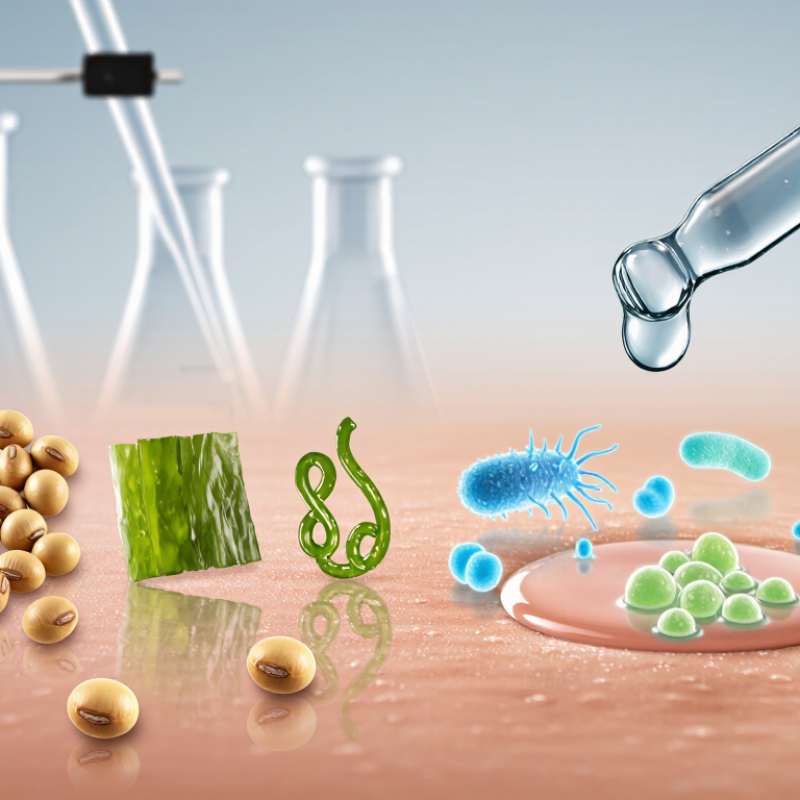
Fermented skincare uses microorganisms to transform ingredients such as rice, yeast, or soy. This process can create smaller compounds, amino acids, and organic acids. These ingredients may feel lighter and support skin comfort. However, fermented does not automatically mean probiotic. Most products contain postbiotic materials, not living bacteria.
The market is expanding. Grand View Research estimated the global probiotic cosmetics market at about US$317 million in 2022, with projected annual growth of roughly 7% through 2030. This figure includes more than fermented products, so it should not be treated as direct proof of fermented skincare demand. The distinction matters. A 2023 review in the International Journal of Cosmetic Science also noted that microbiome research remains limited by small studies and inconsistent testing methods.
In practical use, a fermented essence may leave skin softer after cleansing. Apply it to slightly damp skin, then observe redness, tightness, or stinging for several days. Keep expectations modest. Fermented skincare cannot rebuild a damaged microbiome overnight. Preservatives, fragrance, pH, and the complete formula still influence tolerance more than one highlighted ingredient. I would question vague claims such as “balances all bacteria.” Skin differs across age, climate, medication use, and barrier condition. More independent human trials are needed.
Fermented skincare begins with a controlled biological process. Microorganisms break down ingredients such as rice, algae, yeast, or plant extracts. They can produce smaller molecules, organic acids, peptides, and other compounds. These changes may improve an ingredient’s texture, solubility, or skin compatibility. The final formula depends on the organism, temperature, time, and filtration method. Fermentation does not automatically make skincare better. The science is promising, but not complete.
In practice, a well-made fermented ingredient may feel lighter and absorb more easily. It may also support the skin barrier by reducing dryness or discomfort. However, microbiome benefits require careful evidence. A product should not be judged by the word “fermented” alone. Preservatives, pH, packaging, and the complete formula matter greatly. It is tempting to call every fermented extract gentle. That claim needs restraint.
Tips: Check the full ingredient list and follow storage instructions. Apply a small amount first, especially if your skin reacts easily. Avoid combining several exfoliating products at once. Fermented formulas can still contain acids or fragrant plant compounds. Notice your skin over several days, not after one application. Patch testing is practical, though it cannot predict every reaction.
Fermented skincare uses microorganisms to transform ingredients such as rice, yeast, algae, or plant extracts. This process can create smaller compounds, including amino acids, organic acids, peptides, and antioxidants. They may feel lighter on the skin and spread more evenly. Yet fermentation is not a magic upgrade. The final formula matters.
On the skin, these compounds may influence the microbiome by changing moisture, acidity, and available nutrients. A well-hydrated barrier gives resident microbes a more stable environment. Mild organic acids can support an acidic surface, although strength and tolerance vary. Some ingredients may also act as substrates for microbial activity, but laboratory results do not always predict real-world effects. Results can vary.
In practice, watch how your skin responds after cleansing, especially around the cheeks and nose. Less tightness, fewer dry patches, and steady comfort are more useful signs than a “fermented” label. A fragrance, preservative system, or low pH can cause irritation despite the ingredient’s origin. Patch testing is sensible, particularly for reactive skin. I once treated microbiome language as proof of gentleness; that assumption needs correction. Evidence remains uneven, and long-term studies on complete formulas are still limited. Keep it simple.
Fermented skincare uses microorganisms to transform ingredients such as rice, soy, yeast, or plant extracts. This process can produce amino acids, peptides, organic acids, and other compounds. Their effects depend on the formula, concentration, and preservation system.
For the skin barrier, these ingredients may support hydration and reduce roughness. Some fermented extracts contain humectant compounds that help attract water into the outer skin layer. Others may complement barrier lipids, which limit moisture loss. A stronger barrier can feel less tight after cleansing. It may also react less sharply to dry air, wind, or frequent washing.
The microbiome is more complicated than a simple “good bacteria” story. Fermented products may influence the skin’s environment through pH, nutrients, or postbiotic compounds. However, they do not automatically balance every microbiome. Evidence remains uneven, and laboratory findings may not match daily skincare results. That matters.
In practice, patch testing is sensible, especially for eczema-prone or reactive skin. Apply a small amount near the jawline for several days. Watch for burning, persistent redness, itching, or new bumps. A gentle cleanser and a fragrance-free moisturizer may offer more reliable barrier support than an exciting ingredient alone. Fermentation is promising, but the finished formula still decides most of the experience.
| Fermented Skincare Component | Examples of Fermentation-Derived Compounds | Potential Microbiome Relevance | Potential Barrier or Skin Benefit | Evidence Status | Important Considerations |
|---|---|---|---|---|---|
| Fermented plant extracts | Organic acids, amino acids, polyphenol metabolites, peptides and sugars | May provide compounds that interact with the skin environment and may support a balanced microbial ecosystem when the formula is well tolerated. | May help improve hydration, softness and antioxidant protection. | Preliminary to moderate | Results vary substantially according to the plant source, fermentation method, concentration and finished-product formulation. |
| Fermented yeast or yeast-derived lysates | Beta-glucans, amino acids, nucleotides and peptides | May support skin comfort and help reduce the impact of environmental stress without functioning as a live probiotic. | May support moisturization, resilience and the appearance of irritated skin. | Preliminary to moderate | Lysates and filtrates are non-living ingredients; they should not automatically be described as probiotics. |
| Fermented rice or grain extracts | Amino acids, minerals, peptides, sugars and phenolic compounds | May contribute to a skin-friendly formulation by supporting hydration and avoiding excessive disruption of the surface environment. | May improve skin feel, hydration and the appearance of uneven tone. | Preliminary | Cosmetic benefits are often supported by small studies or ingredient testing rather than large independent clinical trials. |
| Fermented soy or legume extracts | Peptides, amino acids, sugars and transformed isoflavone-related compounds | May support the skin environment indirectly through hydration and antioxidant activity; direct microbiome effects remain uncertain. | May support smoothness, elasticity and moisture retention. | Preliminary | People with known sensitivities to legumes should review the ingredient list carefully. |
| Fermentation-derived humectants | Glycerol, lactic acid, amino acids and other water-binding molecules | Do not directly add beneficial bacteria, but adequate hydration can help maintain a more stable surface environment. | Can reduce dryness and support the appearance of a smoother, more flexible barrier. | Moderate to strong | Humectants work best when combined with emollients or occlusives, especially in dry climates. |
| Fermented acids and postbiotic metabolites | Lactic acid, short-chain organic acids, peptides and microbial cell fragments | May influence pH and microbial signaling; effects depend on concentration and the existing skin ecosystem. | May support exfoliation, hydration and a mildly acidic surface environment. | Preliminary to moderate | High concentrations or frequent use may cause stinging, dryness or irritation, particularly on sensitive skin. |
| Fermented oils and lipid-rich extracts | Free fatty acids, sterols, antioxidants and modified lipid fractions | May help maintain a favorable surface environment by reducing excessive dryness and supporting skin comfort. | Can improve softness and reduce transepidermal water loss when appropriately formulated. | Moderate | The fatty-acid profile and oxidation stability are important for tolerability and performance. |
| Complete fermented skincare formula | Fermented extracts combined with humectants, emollients, preservatives and pH adjusters | May be microbiome-compatible when it maintains a suitable pH, avoids unnecessary irritation and preserves skin hydration. | Potentially supports hydration and barrier comfort, but the full formula determines the final effect. | Product-dependent | “Fermented” does not guarantee microbiome benefits; fragrance, alcohol, acids and preservatives may affect tolerability. |
What Is Fermented Skincare for the Skin Microbiome?
Safety, Product Selection, and Everyday Use
Fermented skincare uses microorganisms to process ingredients before application. This process may create smaller compounds, antioxidants, or soothing by-products. It does not necessarily mean the product contains live bacteria. Many formulas contain postbiotic ingredients instead. The evidence is promising, but still incomplete.
Safety starts with a small patch test behind the ear or along the jaw. Wait 24 hours and watch for burning, swelling, or persistent redness. Stop using it if irritation develops. Choose products with clear ingredient lists, sealed packaging, and suitable preservatives. Fermentation does not prevent contamination. “Natural” does not always mean gentle. Fragrance, essential oils, and strong acids may still disturb sensitive skin.
Keep the routine simple. Apply a fermented essence or serum after cleansing, then use moisturizer. Start every other day for two weeks. Observe tightness, itching, oiliness, and new bumps. Less can work better. Avoid introducing several new products together; otherwise, you may not identify the trigger. A dermatologist can help when symptoms persist, especially with eczema or recurrent rashes. I would not assume every microbiome claim is equally reliable. Product quality, storage, and individual skin biology can change the result. Keep the container away from heat and close it after each use.
Skin is naturally mildly acidic. Choosing gentle, fragrance-free products and avoiding unnecessary antimicrobial ingredients can help support the skin barrier and its resident microbiome. Fermentation does not automatically make a product probiotic or guarantee a microbiome benefit.
How to read the chart: The ranges show commonly reported approximate skin-surface pH values by body site. A lower pH is more acidic; healthy skin is commonly described as mildly acidic, although values vary with age, sweat, washing, climate, and measurement method.
Everyday use: Introduce one product at a time, patch-test first, stop if persistent irritation occurs, and prioritize a gentle cleanser and moisturizer over aggressive “microbiome-balancing” claims.
Fermented skincare uses microorganisms to transform ingredients such as rice, yeast, algae, or plant extracts. The process may create amino acids, peptides, organic acids, and antioxidants. These compounds can feel lighter and spread more evenly. It is not a magic upgrade.
No. Fermented products usually contain postbiotic materials rather than living bacteria. “Fermented” does not automatically mean “probiotic.” Check the complete ingredient formula.
They may influence moisture, acidity, and available nutrients on the skin’s surface. Better hydration can give resident microbes a steadier environment. Mild organic acids may support the skin’s natural acidity. Results vary.
No. The skin microbiome cannot be rebuilt overnight. Long-term effects remain uncertain because human studies are limited and inconsistent. Keep expectations modest.
Apply it after cleansing while the skin is slightly damp. Observe tightness, redness, dry patches, or stinging for several days. Stop if discomfort persists. Keep it simple.
No. Fragrance, preservatives, pH, and the full formula may affect tolerance more than fermentation. A fermented ingredient can still irritate reactive skin. The label alone is insufficient.
Look for steady comfort, less tightness, and fewer dry patches around the cheeks or nose. Softer skin after cleansing may be encouraging. One good application proves very little.
Yes. Apply a small amount to a limited area before using it widely. Watch for redness, burning, or itching over several days. I once treated microbiome language as proof of gentleness; that assumption needed correction.
Fermented skincare uses microorganisms to transform botanical, dairy-free, or other cosmetic ingredients into smaller, more bioavailable compounds. During fermentation, natural enzymes and microbial activity can create amino acids, organic acids, antioxidants, and other skin-supportive substances while sometimes improving an ingredient’s texture and tolerability. Rather than treating fermentation as a guaranteed solution, it is best understood as a preparation method that may enhance the functional qualities of selected ingredients.
A key question is: how do fermented ingredients benefit skin microbiome? They may help support a balanced skin environment by providing gentle nutrients, soothing compounds, and hydration that reinforce the skin barrier. This can contribute to improved comfort, moisture retention, and resilience against everyday environmental stress. However, results depend on the formula, concentration, preservation system, and individual skin condition. Choose products with clear ingredient lists, introduce them gradually, and patch test before regular use, especially if your skin is sensitive or easily irritated.

SehatiCore Supplement