In today's beauty landscape, consumers often face a crucial question: what is the difference between natural and synthetic cosmetic ingredients? As awareness of skin health and environmental impact grows, understanding these differences becomes essential. Natural cosmetics typically utilize ingredients derived from plants and minerals. They are often perceived as safer and more eco-friendly. However, the term "natural" can sometimes mislead, as not all natural ingredients are harmless.
On the other hand, synthetic cosmetics are formulated using man-made chemicals. These ingredients can offer enhanced effectiveness and stability. But there are concerns regarding their potential long-term effects on skin and health. Consumers may find it challenging to navigate the diverse range of products available. Research and expert opinions highlight that neither category is entirely superior. Personal skin types and preferences play a significant role in choosing the right products.
As you evaluate your cosmetic choices, consider the source and function of each ingredient. Reflecting on what matters most in your beauty routine can help you make informed decisions that align with your values and skin needs.
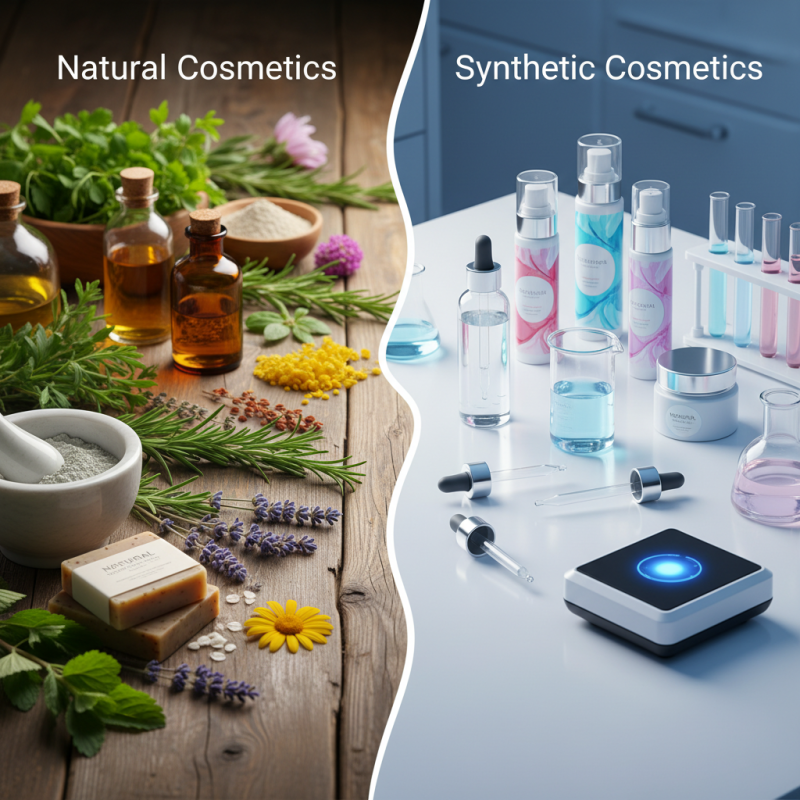
Natural cosmetics are made with ingredients sourced from nature. Common components include plant extracts, essential oils, and minerals. These products aim to nourish and enhance the skin without synthetic additives. Natural cosmetics often promote a holistic approach to beauty. They focus on using substances that work in harmony with the body.
Key ingredients in natural cosmetics are often well-known for their benefits. For example, aloe vera soothes and hydrates. Coconut oil provides deep moisture and has antibacterial properties. These ingredients can help maintain skin balance and promote overall health. However, not all natural ingredients are good for everyone. Allergy risks exist.
Tips: Always perform a patch test before using a new product. Be cautious with essential oils, as they are potent and can cause irritation. Read labels carefully to ensure you understand what you're applying to your skin. Natural does not always mean safe; awareness is crucial.
| Characteristic | Natural Cosmetics | Synthetic Cosmetics |
|---|---|---|
| Definition | Products derived from natural sources with minimal processing. | Products created using chemical processes and artificial ingredients. |
| Key Ingredients | Essential oils, plant extracts, natural waxes, butters. | Parabens, sulfates, synthetic fragrances and dyes. |
| Skin Compatibility | Generally better for sensitive skin; less likely to cause irritation. | Can cause reactions in sensitive individuals; more potential allergens. |
| Environmental Impact | Biodegradable ingredients; less harmful to ecosystems. | Often non-biodegradable; potential for long-term environmental harm. |
| Efficacy | Gentler, gradual results; focuses on overall skin health. | Targeted results; may show faster visible effects. |
: Natural cosmetics are products made from ingredients sourced from nature. They avoid synthetic additives.
Common ingredients include plant extracts, essential oils, and minerals. These nourish and enhance the skin.
Aloe vera soothes and hydrates the skin effectively. It's well-known for its calming properties.
No, not all natural ingredients suit everyone. Allergy risks exist, so caution is essential.
Always perform a patch test to check for allergic reactions. This step is crucial for safety.
Synthetic cosmetics are stable and effective. They often contain preservatives and colorants for longevity.
Some synthetic components can irritate the skin or cause allergic reactions in sensitive individuals.
Consumers must think critically about ingredient components. Awareness and research lead to informed choices.
Yes, essential oils are potent and can cause irritation for some people. Use them cautiously.
Pay attention to all ingredients listed to understand what you're applying to your skin. Awareness is key.
The article "What is the Difference Between Natural and Synthetic Cosmetics?" delves into the definitions and key ingredients that distinguish natural cosmetics from their synthetic counterparts. Natural cosmetics typically feature ingredients derived from plants and minerals, promoting a more organic approach to skincare. In contrast, synthetic cosmetics are composed of man-made ingredients, often designed to enhance product performance and stability.
The discussion further explores the benefits and drawbacks of both types of cosmetics. Natural products are often praised for their gentle effects and minimal environmental impact, while synthetic cosmetics may offer greater efficacy and longevity. A comparative analysis highlights the safety profiles and environmental concerns associated with each category, ultimately addressing the pressing question: what is the difference between natural and synthetic cosmetic ingredients? By understanding these distinctions, consumers can make more informed choices tailored to their personal values and skin needs.

 SehatiCore Supplement