China’s organic raw materials are entering a more demanding global market. Buyers now inspect soil management, seed sources, processing records, and certification evidence. The FiBL and IFOAM Organics International Yearbook 2024 reported 96.4 million hectares of organic farmland worldwide in 2022. The same report valued the global organic market at approximately €134.8 billion. These figures show strong demand, but they do not prove that every organic material performs better.
So, what makes organic raw materials different from conventional ones? The difference usually begins before harvesting. Organic systems restrict synthetic fertilizers, pesticides, genetically modified organisms, and certain processing aids. China’s organic certification framework also emphasizes approved inputs, production controls, inspection, and traceability. A bag of organic soybean powder, for example, should connect back to documented fields, storage areas, and processing batches. That chain matters.
Sir Albert Howard, an early organic agriculture researcher, wrote, “The maintenance of soil fertility is the first condition of any system of permanent agriculture.” His principle remains practical today. Organic raw materials may support soil-focused production, but organic status alone does not guarantee higher nutrition, cleaner logistics, or better taste. USDA Economic Research Service studies have also found that organic yields vary considerably by crop and management quality. That uncomfortable detail deserves attention.
China’s strongest suppliers therefore need more than an organic certificate. They need credible testing, stable specifications, transparent origin records, and experienced quality teams. Conventional materials may offer lower prices and larger volumes. Organic materials may offer stronger traceability and differentiated market value. Neither option is automatically perfect. The real comparison depends on crop, supplier discipline, processing conditions, and the buyer’s intended use.
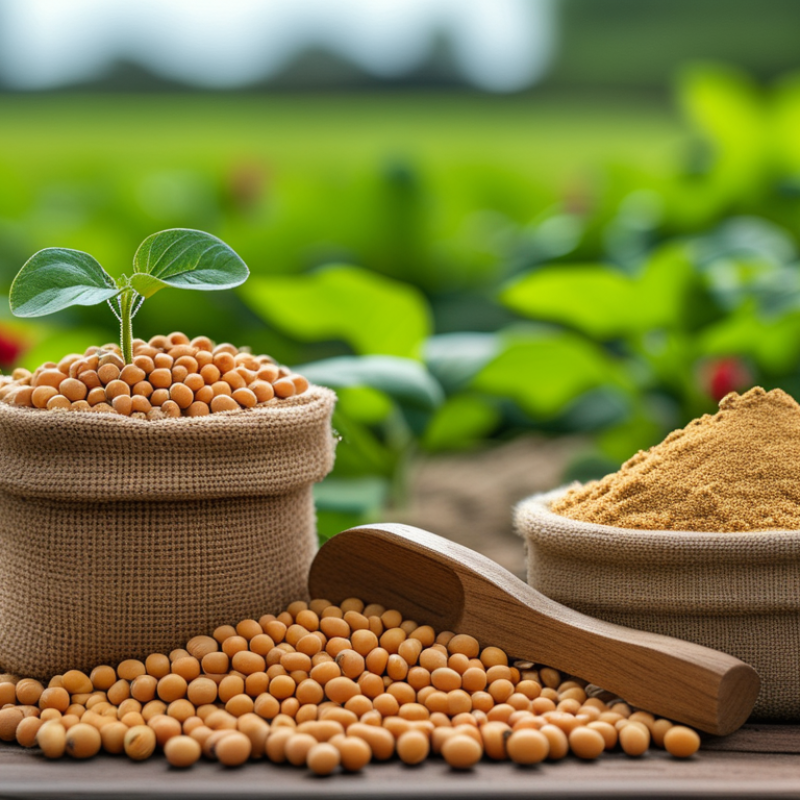
China’s organic certification system relies on national rules administered by the Certification and Accreditation Administration of China (CNCA). Organic production also follows GB/T 19630 standards, covering farming, processing, labeling, and management. Certified operators must use approved production methods and keep records for inspection.
Traceability begins in the field. Growers record seed sources, soil treatment, irrigation, harvest dates, and storage movements. Processors document incoming materials, production batches, cleaning procedures, and shipping details. Certification bodies review these records and conduct inspections. A valid organic label should connect the product with a certification code, allowing buyers to check its certification information through official channels.
This creates a clearer difference from conventional materials, where farming inputs may follow broader production rules. In practice, traceability quality can vary. Paper records may be incomplete, and a digital code does not automatically prove every field practice. Buyers should compare certificates, inspection dates, batch numbers, and test records. Small inconsistencies deserve questions, not immediate accusations. The system is credible when records match physical goods, supplier statements, and inspection evidence. That connection still requires careful human review.
| Data Dimension | China Organic Raw Materials | Conventional Raw Materials | China Certification and Traceability Reference |
|---|---|---|---|
| Regulatory framework |
Certified system Must comply with China’s organic product certification requirements and the applicable national organic product standard. |
General compliance Must comply with applicable food, agricultural-product, safety, labeling, and quality requirements, but does not need organic certification. |
China’s organic certification is supervised by the Certification and Accreditation Administration of China (CNCA). |
| Core national standard | Uses GB/T 19630-2019, Organic Products, which covers production, processing, labeling, marketing, and management requirements. | Follows the standards and specifications applicable to the specific commodity and production process; GB/T 19630-2019 is not required solely because a product is conventional. | GB/T 19630-2019 is the current widely referenced national standard for China’s organic product system. |
| Farming and production inputs | Inputs are restricted by the organic production rules. The operator must manage fertilizers, crop-protection materials, feed additives, veterinary medicines, and processing aids according to approved organic requirements. | May use legally permitted synthetic fertilizers, pesticides, veterinary medicines, feed additives, and processing aids, subject to applicable limits and use instructions. | Organic certification evaluates the input list, use records, purchase documents, and production procedures. |
| Genetically modified organisms | Genetically modified organisms and products made from them are not permitted within certified organic production under China’s organic requirements. | GMO status depends on the crop, supply chain, product specification, and applicable regulatory and customer requirements; conventional status alone does not indicate GMO or non-GMO status. | GMO exclusion is a defining control point in organic production certification. |
| Farm conversion period | Land generally needs a documented conversion period before products can be sold as organic. The exact period depends on the production type and certification requirements. | No organic conversion period is required. | Conversion history, land-use records, and production records are reviewed during organic certification. |
| Separation and contamination prevention | Certified operators must prevent commingling with non-organic materials and control contamination risks during harvesting, storage, transportation, processing, and packaging. | Must meet general safety and quality controls, but does not require organic and non-organic segregation unless required by a specific claim or contract. | Certification audits examine facility zoning, cleaning procedures, storage identification, transport controls, and mass-balance records. |
| Certification body | Certification must be performed by an organic certification body approved and supervised under China’s certification system. | Organic certification is not required. Other conformity assessments may apply depending on the product and market. | CNCA maintains oversight of certification activities and certification-body approval. |
| On-site inspection | On-site inspection is used to verify production conditions, input use, records, separation controls, processing operations, and conformity with the organic plan. | Inspection or official sampling may occur under general food, agricultural, or quality-control programs, but the organic inspection scope does not apply. | Organic certification is based on document review, risk assessment, inspection, and conformity evaluation. |
| Traceability records | Typical records include farm or facility identification, plot information, seed or breeding records, input purchases, input applications, harvest quantities, processing batches, inventory movement, sales, and complaint or recall information. | Traceability records are required when applicable under food-safety, quality-management, customer, or legal requirements, but the organic-specific record set is not mandatory. | Traceability is evaluated through documented links between inputs, production lots, processing batches, inventory, and sales. |
| Organic code and public verification | Packaged certified organic products sold in China generally carry the China organic certification mark and an organic certification code, subject to applicable labeling rules and exemptions. | Cannot use China’s organic certification mark or present a conventional product as certified organic. | Consumers and buyers can use China’s official organic certification information service to check certification information where data are available. |
| Labeling claim | The claim “organic” must correspond to valid certification and compliant labeling. The product category, certification scope, and package information must be consistent. | May use truthful descriptions such as “conventional,” “standard,” or product-specific quality claims, but must not imply organic certification without valid authorization. | Organic claims are controlled through certification, labeling review, and certification-mark requirements. |
| Mass-balance consistency | Certified output should be reasonably supported by certified input quantities, production yields, processing ratios, inventory records, and sales documents. | Quantity reconciliation may be used for general inventory or quality control, but organic mass-balance verification is not required. | Mass-balance review helps identify commingling, unsupported organic volumes, and gaps in lot traceability. |
| Audit frequency and validity | Certification is not a one-time “quality grade.” It requires ongoing conformity management, surveillance, renewal, and reassessment according to the certification program. | Validity depends on the applicable license, inspection program, customer contract, or management system; no organic renewal process applies. | Certification status should be checked against current certificate information rather than relying only on an old certificate copy. |
| What certification proves | Provides evidence that the certified operator and product scope met China’s organic production, processing, labeling, and management requirements at the time of valid certification. | Indicates that the product is not being sold under China’s organic certification system; it does not automatically mean the product is unsafe or inferior. | Organic certification is a controlled production and supply-chain claim, not a universal guarantee of higher nutrition, taste, or performance. |
: It covers farming, processing, labeling, and management. Certified operators must follow approved methods and keep inspection records.
It begins in the field. Growers record seed sources, soil treatment, irrigation, harvest dates, and storage movements.
Processors should record incoming materials, production batches, cleaning procedures, and shipping details. These records connect materials with specific lots.
Yes. Check the certification code through official channels. Compare the certificate, inspection date, lot number, and test records.
No. Organic farming restricts synthetic pesticides and allows only approved inputs. Some permitted substances still need careful handling.
Conventional materials mainly follow legal residue limits. They may use crop protection products while remaining within those limits.
It is a legal maximum residue level. It is not a recommended application amount.
No. A code cannot prove every field practice. Physical goods, supplier statements, inspections, and laboratory results should match.
Paper records may be incomplete. Dates, batch numbers, or storage details can conflict.
Ask for clarification before making accusations. Records can be messy. Careful human review still matters.
China’s organic raw materials are distinguished by a regulated production system that emphasizes approved inputs, documented farm practices, and traceability from cultivation to processing. Under China’s CNCA organic certification framework, producers must maintain records, follow inspection procedures, and demonstrate that materials meet organic requirements. This helps explain what makes organic raw materials different from conventional ones: organic production restricts synthetic pesticides and fertilizers, while conventional agriculture may use them within the limits established by China’s GB safety standards. Certification therefore focuses not only on the final product, but also on how it is grown, handled, and verified.
Evidence from Chinese farms suggests that organic production can involve higher labor costs, more careful management, and sometimes lower yields, although results vary by crop, region, and farming method. FiBL data also highlights organic agriculture’s relevance to soil management, biodiversity, and environmental resilience. At the same time, China’s organic sales and certification activity reflect growing consumer interest in food safety, transparent sourcing, and sustainable agriculture, despite the need to balance price, productivity, and verification costs.

 SehatiCore Supplement